
What is an EAP: Employee Assistance Program or Empty and Absent Promises?

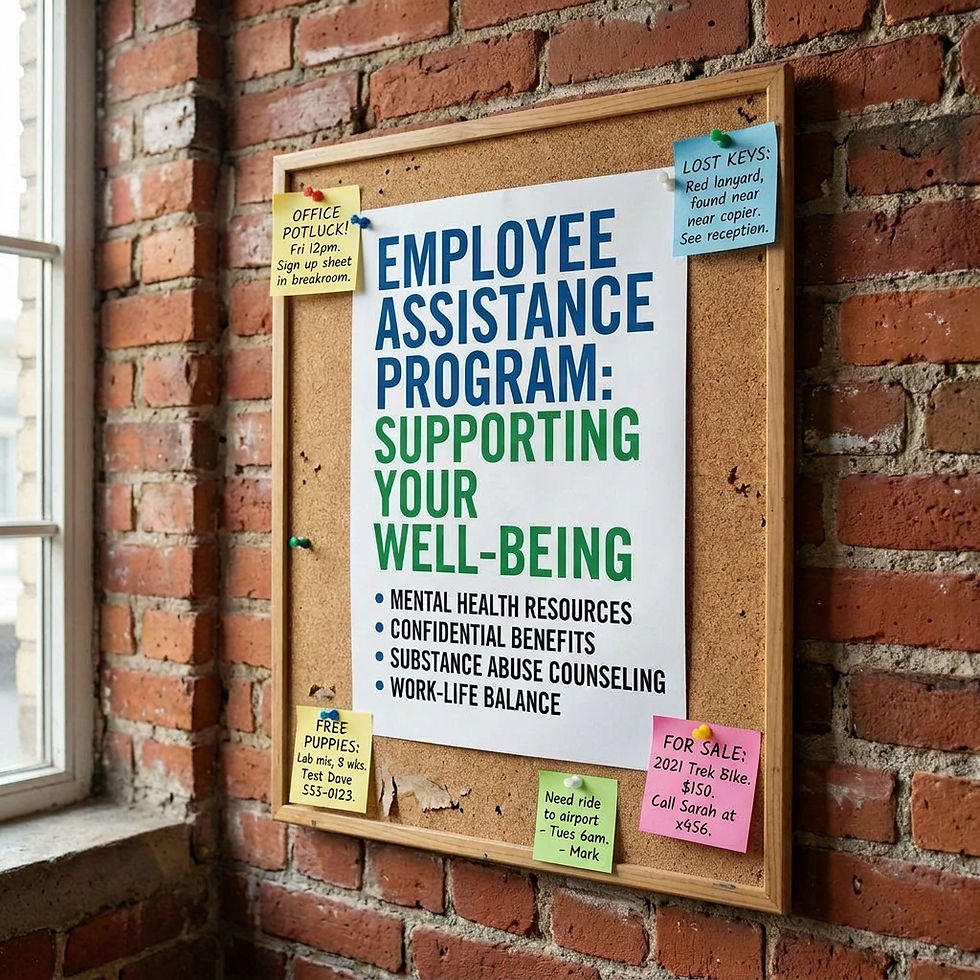
Across corporate offices, hospitality organizations, municipalities, and emergency services, many leaders confidently say they have an Employee Assistance Program. It shows up on posters in break rooms, appears in onboarding packets, and is referenced in policy manuals.
But an important question needs to be asked.
Is the EAP truly helping employees, or has it become an empty, absent, and passive program?
Mental health support is not a checkbox
Workplace mental health support is not a line item used to satisfy a requirement. It is not a hotline number taped to a wall. It is not a benefit employees discover only after a crisis has already occurred.
The reality is that many EAPs struggle with engagement, accessibility, and relevance. Employees often do not know how to access the program. Some do not trust the confidentiality of the services. Others question whether the professionals available truly understand the environment they work in.
That gap becomes even more concerning in professions where exposure to stress, trauma, and cumulative pressure is part of the job.
First responders face high-risk events that are inherently stressful and often cumulative over the course of a career.
Hospitality teams regularly manage emergencies, guest conflicts, and unpredictable situations that create ongoing stress.
In many operational environments, the expectation is simple. Perform the job regardless of personal circumstances.
When someone reaches out, generic is not enough
When an employee finally raises their hand and asks for help, they do not need a generic referral and a phone number. They need professionals who understand the culture of their profession, the operational realities they face, and the psychological stressors that come with the work. If the support does not reflect the reality of the workforce, people stop trusting it. When trust disappears, the program becomes a poster instead of a lifeline.
Three questions every EAP should answer
If an organization wants to know whether its EAP is effective or simply present on paper, three questions should be asked.
Are the resources accessible and trusted by employees?
Are the professionals competent in the fields relevant to the workforce they support?
Is the program actively engaging employees before problems escalate into a crisis?
If these questions cannot be answered with confidence, the EAP may exist in policy, but not in practice.
Beyond compliance and toward capability
At Battalion 1 Consultants, we believe mental health support must move beyond compliance and toward capability.
Through B1C and its growing network of professionals, we help organizations structure frameworks that go beyond placing a poster on the wall. Effective programs require visible and consistent leadership engagement. They require access to credentialed professionals who understand the culture of the workforce they support. They require structured peer support networks, practical resilience training, and continuous evaluation to ensure the program remains relevant.
In other words, programs must be built to deliver real-world impact and measurable results.
The standard is simple
Mental health resources must be visible, trusted, and accessible long before they are needed. When organizations commit to building that level of support, they do more than check a box. They create an environment where employees know help exists, that it works, and that it understands them. Because when support systems fail, the cost is not just operational.
It is personal.
And that is a cost no organization can afford.
Supporting research
Research continues to show that simply offering an EAP does not guarantee employee engagement or improved outcomes. The Employee Assistance Professionals Association reports that utilization rates for many workplace EAP programs remain between 3 percent and 8 percent, suggesting that many employees either do not know about the services or do not trust or use them.
A 2023 report from the American Psychological Association on workplace mental health found that employees are significantly more likely to use mental health services when they trust that providers understand their work environment and when leaders actively support the program.
Research published in the Journal of Workplace Behavioral Health has also found that EAP effectiveness increases when programs are integrated with peer support initiatives, leadership engagement, and behavioral health professionals who understand the culture of the workforce they serve.
These findings reinforce a simple reality. An EAP cannot function as a passive resource. It must be part of an active and trusted system of support.
Need help with your EAP? Contact us today and let us help!
Paul Wind, CEO
Battalion 1 Consultants
877-380-9911


Comments